


The 2026 Paradigm: Artificial Intelligence as Medical Infrastructure
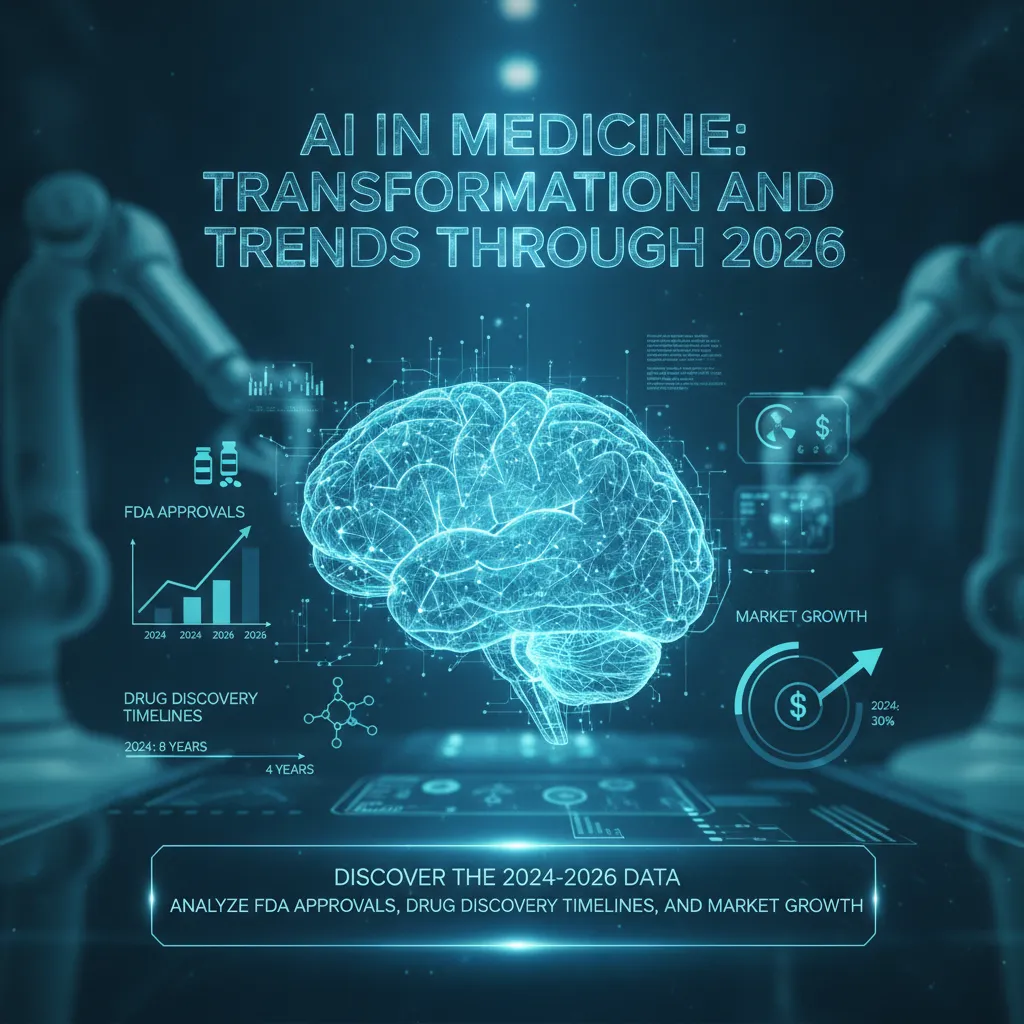
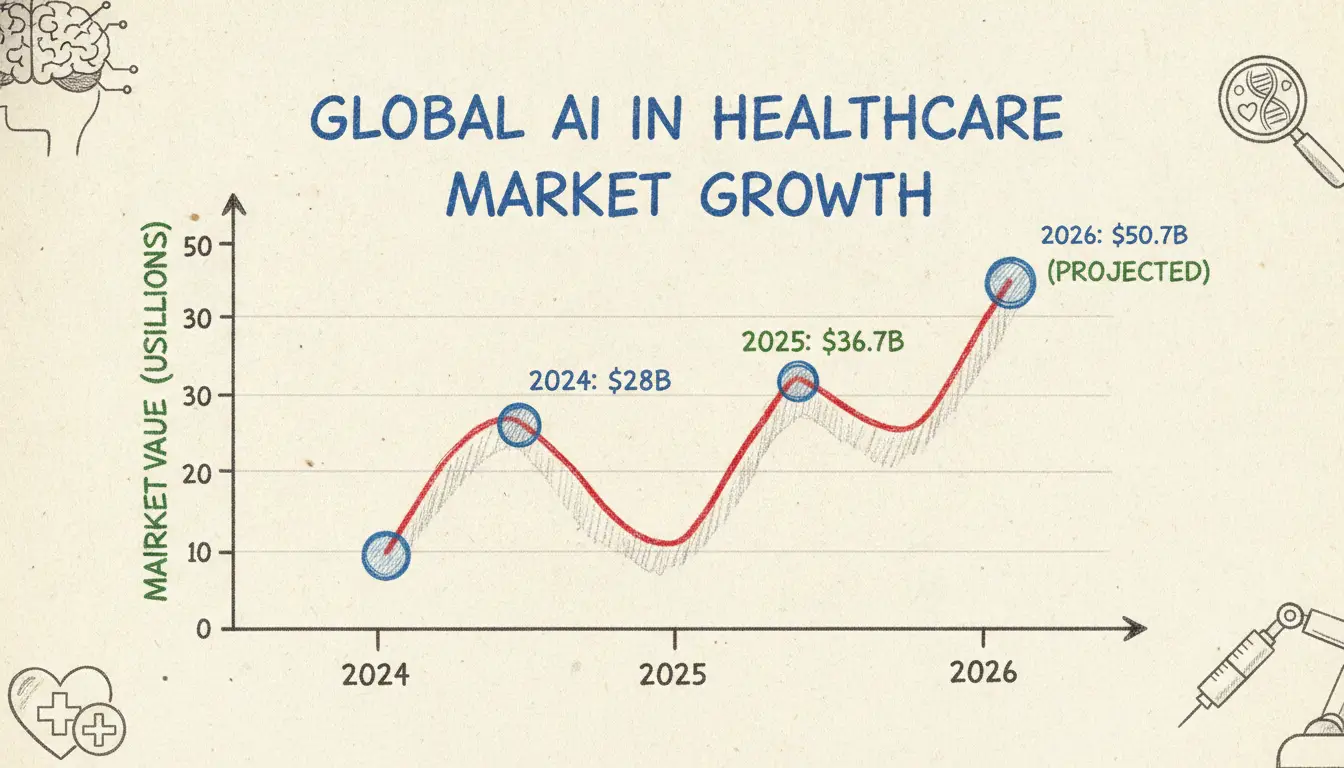
In 2026, the integration of Artificial Intelligence in Medicine has transitioned from experimental pilot programs to foundational infrastructure. Data from the 2026 AI Index Report by Stanford HAI indicates that biological model development is currently limited by data availability rather than architectural constraints. Systemic adoption across hospital networks has resulted in measurable shifts in clinical workflows and pharmaceutical research. According to Grand View Research, the global AI in healthcare market reached a valuation of USD 36.7 billion in 2025 and is projected to reach USD 50.7 billion by the conclusion of 2026.
This growth is driven by requirements for enhanced diagnostic accuracy, operational efficiency, and the management of high-volume medical datasets. Statistical analysis shows that 85% of medical leaders have implemented or are currently exploring generative AI capabilities as of the first quarter of 2026. The technical landscape is defined by a shift toward modular platforms that facilitate data interoperability and automated clinical decision support.

Market Valuation and Segment Growth Analysis
The economic impact of AI in Medicine is quantifiable through revenue shares and compound annual growth rates (CAGR). The following table delineates the market distribution by component and technology as of 2025-2026.
| Market Segment | 2025 Revenue Share (%) | Projected CAGR (2026-2033) |
|---|---|---|
| Software Solutions | 46% | 38.9% |
| Machine Learning | 35% | 40.2% |
| Pharmaceutical & Biotech | 30% | 21.2% |
| Robot-Assisted Surgery | 13% | 15.4% |
Diagnostic Accuracy and FDA Regulatory Trends
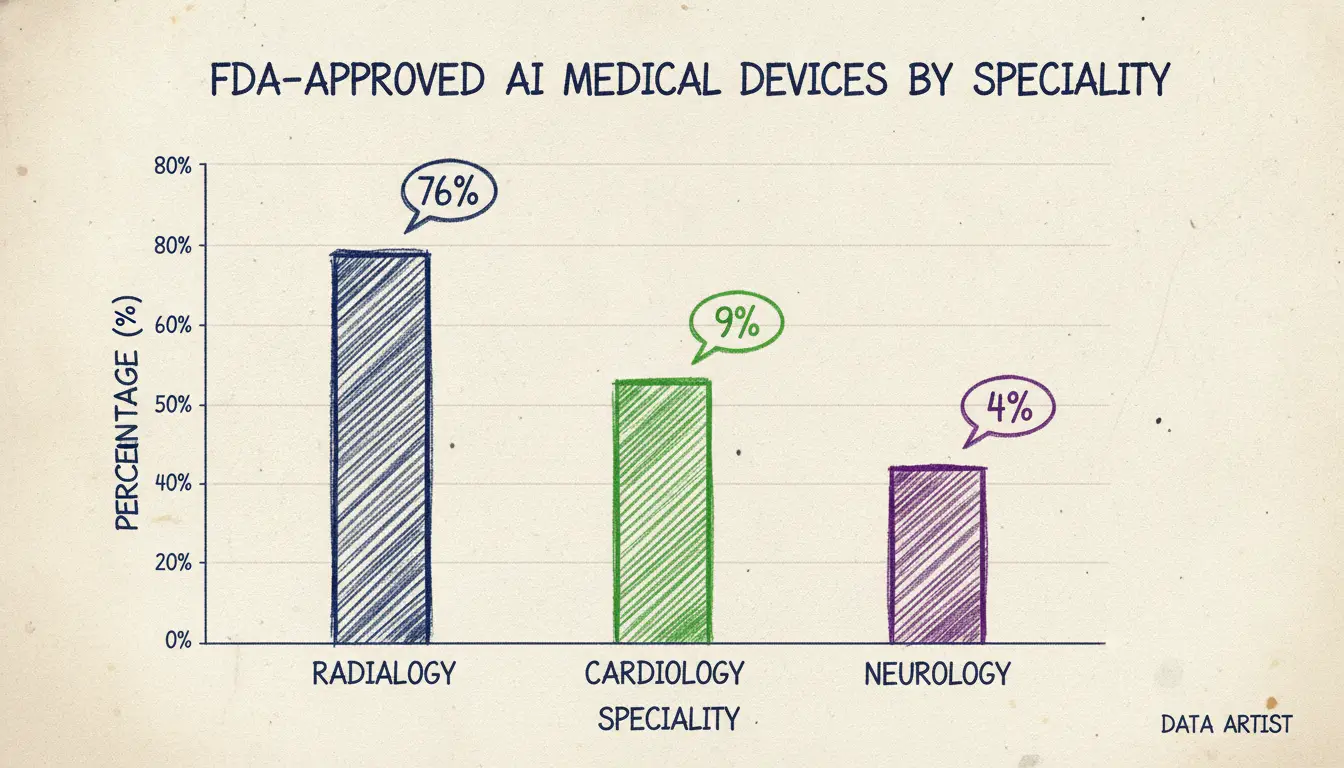
The U.S. Food and Drug Administration (FDA) has maintained a rigorous authorization schedule for AI-enabled medical devices. As of May 2025, the cumulative total of authorized AI/ML-enabled devices reached 1,451 units. According to recent data, “The FDA authorized 258 AI medical devices in 2025 alone, representing a significant escalation from previous years,” as noted in the FDA AI-Enabled Medical Device List. Radiology remains the primary application area, accounting for approximately 76% of all clearances.
Radiology and Imaging Statistics
Clinical implementation of AI in radiology focuses on signal analysis and automated detection. In 2025, 128 of the 191 newly approved devices were specialized for radiological applications. Technical evaluations of these systems show that narrow AI models achieve specialist-level accuracy in bounded tasks such as identifying pulmonary nodules or intracranial hemorrhages. However, general-purpose diagnostic systems still exhibit variance when compared to human clinicians in open-ended diagnosis scenarios.
| Medical Specialty | Number of AI Devices (2025) | Percentage of Total |
|---|---|---|
| Radiology | 1,104 | 76% |
| Cardiology | 130 | 9% |
| Neurology | 58 | 4% |
| Hematology | 29 | 2% |
Research published in npj Digital Medicine in 2025 highlighted that while device counts are increasing, transparency regarding training data composition remains a challenge. Only 2.4% of AI devices authorized in 2025 were supported by randomized controlled trial (RCT) data, with the majority utilizing the 510(k) pathway based on substantial equivalence to existing predicates.
AI-Driven Drug Discovery and R&D Compression
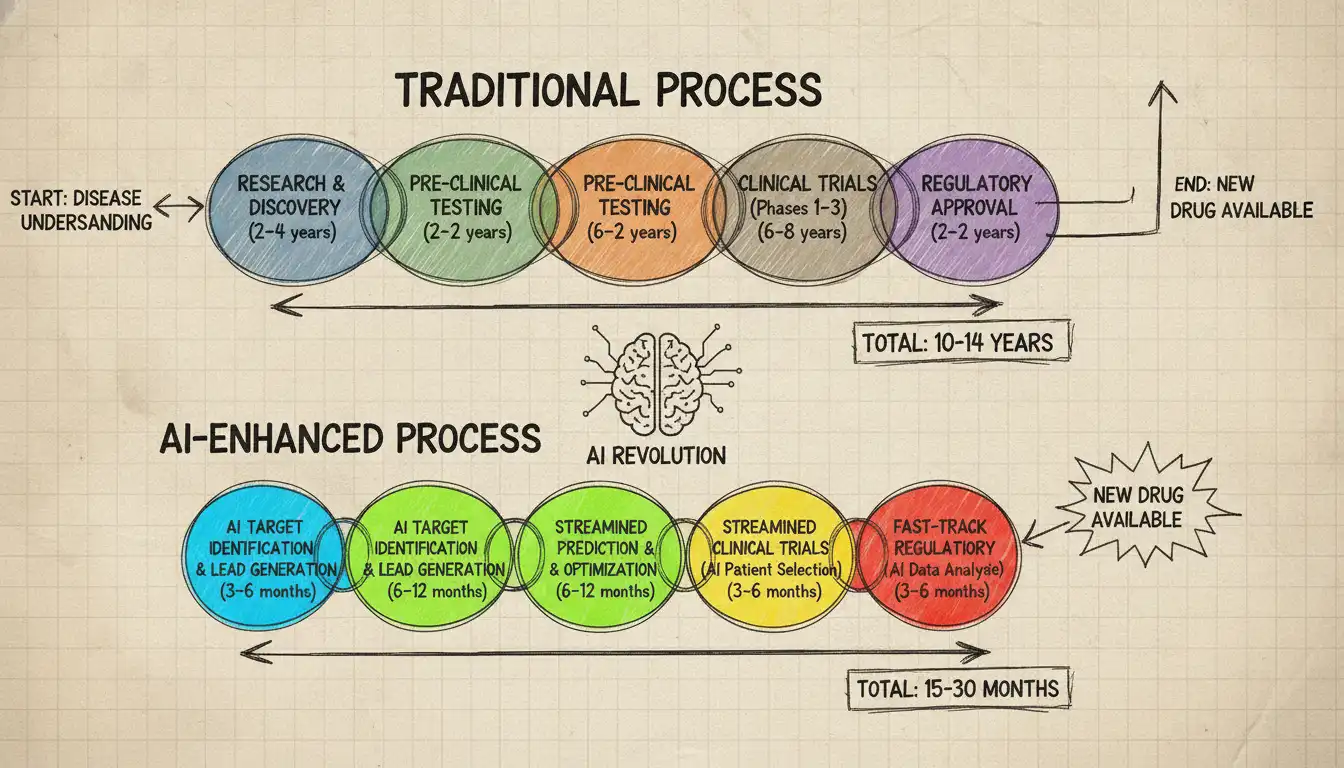
The pharmaceutical industry utilizes AI to address “Eroom’s Law,” which describes the increasing costs and decreasing efficiency of drug development. Generative AI models, including Graph Neural Networks (GNNs) and Transformers, are utilized for molecular modeling and target identification. According to a 2025 review by the ICCK, “early-stage discovery timelines are compressed by up to 62.5%, reducing the target-to-lead time from 24 months to approximately 9 months.”
Biochemical Modeling and Protein Folding
Developments such as AlphaFold 3 and AlphaGenome have expanded the training sets for structural prediction from hundreds of thousands to tens of millions of entries. In 2026, smaller models have demonstrated superior performance in specific tasks; for instance, MSAPairformer, a 111-million-parameter model, outperformed larger legacy systems on the ProteinGym benchmark. These models predict cellular responses to chemical compounds without the initial requirement for wet-lab experiments, although experimental validation remains the regulatory standard.
Case Study: AI Drug Pipeline Milestones
The transition from theoretical algorithms to clinical trials is evidenced by candidates like ISM001-055. This fibrosis candidate reached human trials in under 18 months, compared to the industry average of 48 months. The following table summarizes key AI-originated molecules in the 2025-2026 pipeline.
| Candidate | Target/Indication | Status (2026) | Timeline Reduction |
|---|---|---|---|
| ISM001-055 | Idiopathic Pulmonary Fibrosis | Phase IIb/III | 62% |
| ISM5411 | Ulcerative Colitis | Phase II | 75% |
| ISM6331 | Mesothelioma | Phase I | 50% |
Operational Efficiency and Administrative Burnout Mitigation
Artificial Intelligence in Medicine has had a documented impact on physician burnout. Natural Language Processing (NLP) tools, specifically AI-powered scribes, are used to generate clinical notes from patient interactions. Data from hospital systems in 2025-2026 indicate a 40-45% reduction in physician documentation time. In specific high-volume environments, physicians reported spending up to 83% less time on administrative tasks.
Clinical Capacity and ROI
The Future Health Index 2026 report by Philips states that AI tools save clinicians an average of 132 hours annually. This time reclamation allows for an average increase of eight patient consultations per week per clinician. Economically, the return on investment (ROI) for healthcare AI is realized within an average of 14 months, with every USD 1 invested generating USD 3.20 in value. Furthermore, virtual nursing assistants are estimated to save the healthcare industry USD 20 billion annually by 2026 through the automation of patient monitoring and routine inquiries.
Precision Medicine and Genomic Data Integration
Precision Medicine relies on the integration of genomic, proteomic, and clinical data to tailor treatments to individual patients. AI models enable the processing of Large Multi-Modal (LMM) datasets that human analysts cannot correlate manually. By 2026, the use of knowledge graphs to link genomic data with clinical records has allowed researchers to evaluate immune-related genes in days rather than weeks.
Virtual Cell Models
Virtual cell models, such as STATE and Evo 2, represent the 2026 frontier in precision medicine. These systems simulate cellular environments to predict how genetic perturbations or drug interactions affect specific biological pathways. This reduces the risk of adverse drug reactions (ADRs) by identifying potential toxicity in silico before human exposure. Precision medicine initiatives are a primary driver for the projected USD 194.79 billion AI healthcare market by 2031.
Regulatory Frameworks and Ethical Governance
The rapid deployment of AI in Medicine has necessitated updated governance structures. In 2024 and 2025, the World Health Organization (WHO) released comprehensive guidance on the ethics of Large Multi-Modal Models. According to the WHO Ethics and Governance of AI for Health, regulatory frameworks must prioritize human oversight, transparency, and data sovereignty. “Humans must remain in control of healthcare systems and medical decisions,” the WHO guidelines state, emphasizing that AI should augment rather than replace clinical judgment.
Bias Mitigation and Algorithmic Fairness
A significant ethical challenge remains the presence of bias in training datasets. AI systems can perpetuate existing health disparities if the data used for training is not representative of diverse populations. In 2025, regulatory bodies began requiring Predetermined Change Control Plans (PCCPs) for AI updates to ensure that performance drift does not introduce new risks. Independent audits and impact assessments, as recommended by UNESCO, are increasingly becoming standard requirements for large-scale AI deployments in public health settings. The focus of 2026 regulation is moving toward “transparency by design,” ensuring that AI decision-making processes are intelligible to both clinicians and patients.
As of July 2026, the integration of Artificial Intelligence into Medicine continues to expand, shifting from a focus on individual tools to a comprehensive ecosystem of intelligent agents and automated infrastructure. The objective remains the optimization of patient outcomes through data-driven precision and reduced operational friction.

